Cast monitoring

Advice for parents after a plaster cast is fitted

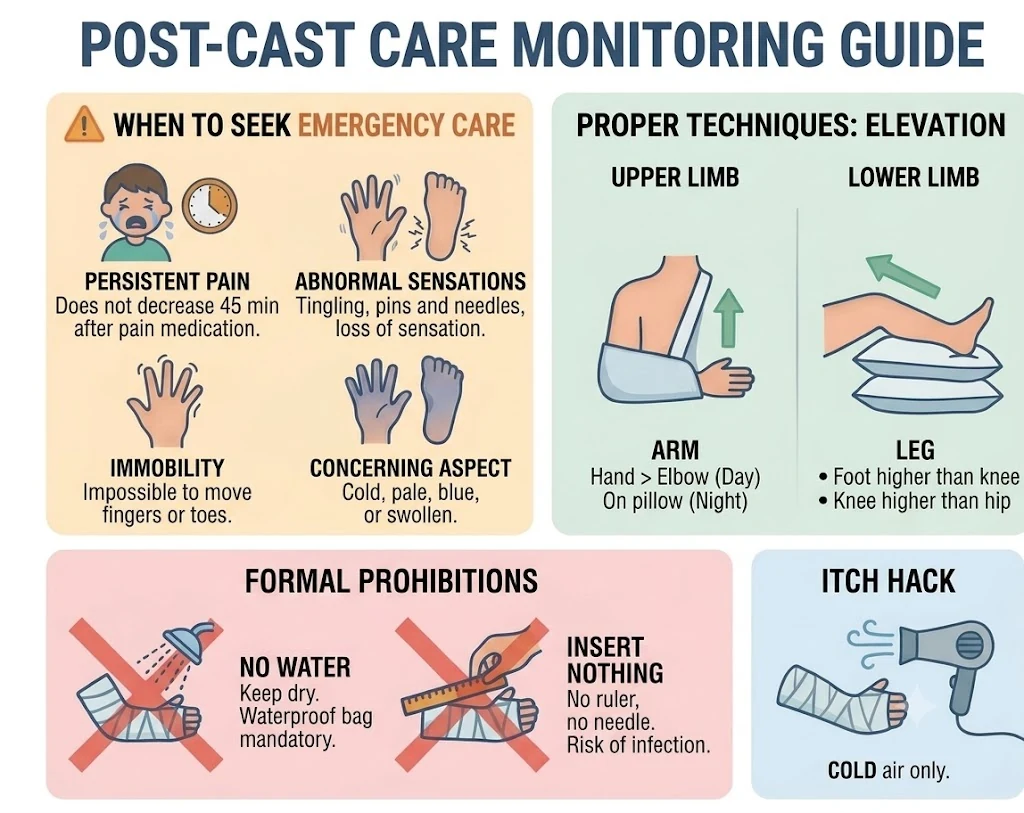
Guide illustré de surveillance d'un plâtre : signes d'urgence, surélévation du membre, interdictions.
📄 View the text version (accessibility and printing)
⚠️ Urgent: when to come back immediately?
The main risk is compression of the limb (compartment syndrome). Moderate pain is normal, BUT it must ease with medication. Return to the emergency department (24/7) if you notice EVEN ONE of these signs:
Persistent painThe child cries or is in pain 30–45 min after taking painkillers, or the pain prevents sleep.
Abnormal sensationsTingling, pins and needles, or loss of feeling in the fingertips/toes.
MovementThe child can no longer move the tips of the fingers/toes.
AppearanceFingers/toes swollen, cold, pale or blue.
Good habits: fighting swelling
To prevent swelling, keeping the limb elevated is mandatory for the first 48 hours.

Upper limb (arm)

Day: arm in a sling (hand higher than the elbow). Night: arm resting on a pillow.

Lower limb (leg)

Foot higher than the knee. Knee higher than the hip.
🚫 Strict do-nots
Never wet the castUse a waterproof bag for showering.
Never insert anything under the castNo ruler, no needle! Risk of infection.
Anti-itch tipHair dryer on the COLD AIR setting.

This advice does not replace medical consultation. If in doubt, contact your surgeon.

📅 Book an appointment online

Frequently asked questions

Which signs require urgent care when wearing a cast?

Any one of these four signs warrants emergency care, 24/7: pain persisting 30–45 minutes after painkillers, tingling or loss of feeling in the fingers or toes, inability to move them, or extremities that are cold, pale, blue or swollen. They indicate compression of the limb.

Is pain under a cast normal?

Moderate pain is normal in the first days, but it must ease with medication. Pain that resists painkillers or prevents the child from sleeping is never trivial: seek medical advice without delay.

How should the casted limb be elevated?

Elevation is mandatory for the first 48 hours. For an arm: in a sling during the day, hand higher than the elbow, resting on a pillow at night. For a leg: foot higher than the knee, knee higher than the hip.

Can the cast get wet, or can my child shower?

The cast must never get wet, for the entire duration of immobilisation. For showering, protect it with a tightly sealed waterproof bag. A damp cast softens, loses its effectiveness and macerates the skin.

It itches under the cast — what can I do?

Never insert anything under the cast — no ruler, needle or pencil: the risk of an unseen wound and infection is real. Use a hair dryer set to COLD air, directed into the opening of the cast.